


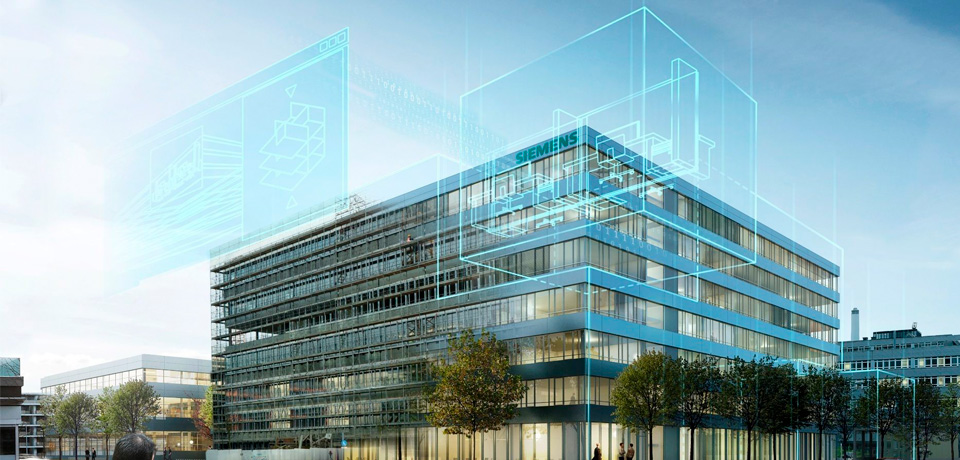
Building Information Modelling (BIM) is a term that has been part of the construction and design industry since the early 2000s. Often mistaken for a 3-D model or a specific piece of software, BIM is actually a methodology that focuses on the flow of information in the building design process – covering all aspects from planning to construction to operation – using an intelligent 3-D model. It works as a shared knowledge resource that allows for collaboration between all stakeholders in the construction and design process, including project expectations, workflows, timelines, materials management and more.
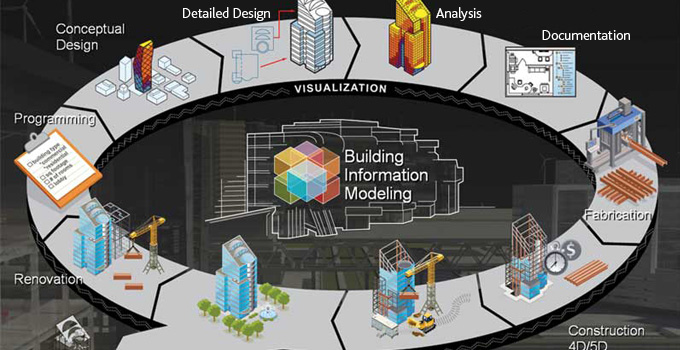
Photo Credit: Autodesk
As a contractor, BIM could be relevant as you begin to take on bigger, more complex projects that require more detailed planning and information management. Or maybe your company requires both access to information and the capability to share data with other parties as part of a multi-stakeholder project. You, as a contractor or the company you own as a contractor might require access to information related to the project you're working on and you, as a contractor, or the company you own as a contractor might be counted on to provide data. Either way, BIM is an interesting development that clearly illustrates how the use of information technology is becoming just as relevant on the job site as the swinging of a hammer.
There are many benefits to using BIM in the construction management process, including concept and feasibility studies that can help with more accurate cost estimation. Once the design process starts, BIM can provide earlier and more accurate design visualizations and accurate 2-D drawings at any stage. It can also improve energy efficiency and sustainability.
Once the project is getting ready for the build stage, BIM can help with aligning design and construction planning and discovering design errors and omissions before construction. The project’s design can also be more quickly changed in response to jobsite problems with design models, making it easier to fabricate custom components. Cost effectiveness can be improved by better implementation of lean construction techniques and the alignment of procurement with design and construction.
As a result, the BIM tool has become a prerequisite for many companies involved in the design, build and operating phases. If you are wondering how BIM can help you, note that it’s integrated into commonly available computer applications. To qualify for inclusion in the BIM category, the software has to provide 2-D or 3-D computer-aided design tools specifically targeted for architectural design and construction. It must also include collaboration functionality that allows multiple team members to work on the same project model at the same time. Lastly, it must offer tools to optimize building performance with performance data and advanced analysis engines.
The most well-known examples of such products are AutoCAD, Revit and SketchUp. There are also many Canadian organizations that specialize in training and consulting for BIM solutions. Furthermore, CanBIM, a nation-wide non-profit organization that serves as Canada’s business voice for the entire building and infrastructure community, has a number of BIM-related resources available on their website.